
Understanding the Differences: Pool Plastering, Marble Dusting, and Pool Finishing
Understanding Pool Plastering, Marble Dusting, and Pool Finishing Choosing the right pool finish is essential for durability, comfort, and style. Pool plastering provides a smooth, classic cement surface that seals and protects the concrete shell. Marble dusting adds a luxurious, polished finish with crushed marble and aggregates, offering increased durability and a softer feel. Pool finishing is the overall process of completing your pool’s interior, incorporating options like plaster, marble, pebble, quartz, or tile for a custom, long-lasting surface. Understanding the differences helps homeowners and pool contractors select the best finish for residential and commercial pools, ensuring beauty, longevity, and safety.
1/27/20266 min read
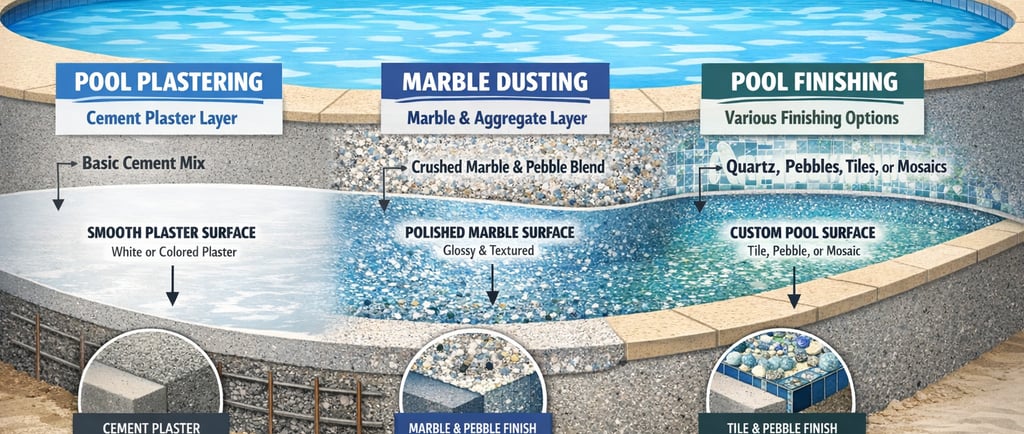
1. Pool Plastering
Definition: Pool plastering is the process of applying a cement-based or specialized plaster coating over the pool shell to create a smooth, waterproof interior surface.
Materials:
White or colored cement plaster
White cement mixed with sand
Sometimes additives for smoother texture or color
Purpose:
Seals the concrete pool surface
Creates a clean, smooth finish
Provides a base layer for water retention
Texture & Feel:
Smooth but slightly coarse compared to marble-based finishes
Can be white, light blue, or custom-colored
Lifespan:
Typically 5–10 years, depending on maintenance and water chemistry
Pros:
Cost-effective
Classic look
Durable when done correctly
Cons:
Can become rough or etch over time
Susceptible to staining or chipping
2. Marble Dusting (also called Pebble or Aggregate Finishes)
Definition: Marble dusting involves mixing fine crushed marble or aggregates into plaster to create a polished, decorative, and durable surface. Often used as a premium pool finish.
Materials:
Marble dust (crushed marble powder)
Cement
Sometimes colored pigments
Occasionally small aggregates or pebbles
Purpose:
Provides a luxurious, smooth, and glossy finish
More resistant to staining and chemical damage than plain plaster
Enhances pool aesthetics with sparkle or subtle colors
Texture & Feel:
Smoother, slightly polished feel compared to regular plaster
Can range from matte to glossy depending on application
Lifespan:
10–20 years with proper care
Pros:
Elegant, high-end appearance
Durable and resistant to chemical etching
Softer on bare feet than plain plaster
Cons:
More expensive than traditional plaster
Requires skilled application for a smooth, uniform finish
3. Pool Finishing
Definition: Pool finishing is the overall process of completing the interior surface of a pool, which may include plastering, marble dusting, tile work, or other decorative surfaces. It’s the final step that makes the pool both functional and visually appealing.
Materials:
Plaster, marble dust, quartz, pebble aggregates, tiles, or epoxy coatings
Purpose:
Provides a finished look
Protects the concrete shell
Enhances water clarity and aesthetic appeal
Texture & Feel:
Depends on the chosen material and style
Options range from smooth plaster to textured aggregate or glossy marble
Lifespan:
Varies widely (5–20+ years), depending on materials used
Pros:
Customizable appearance
Protects pool structure
Can integrate specialty designs (mosaics, color blends, patterns)
Cons:
Cost varies based on material and complexity
Some finishes require professional maintenance
Introduction to Pool Finishes
Key Takeaways:
Plastering is the standard, functional layer.
Marble dusting upgrades plaster for aesthetics and durability.
Pool finishing is the umbrella term encompassing the final interior surface, whether plaster, marble, or tile.
Pool finishes are essential components of swimming pool construction and maintenance, playing a critical role in the overall aesthetic and performance of the pool. They not only define the visual appeal of the pool but also affect its durability, maintenance needs, and user experience. The type of finish selected can significantly influence the longevity of the pool surface and its resistance to wear and tear over time.
There are several types of pool finishes available in the market today, including plastering, marble dusting, and various other finishing techniques. Each finish presents unique characteristics, benefits, and limitations, catering to different preferences and requirements. The choice of pool finish may depend on factors such as budget, desired appearance, and maintenance considerations.
One of the most traditional forms of pool finishes is plastering, which involves applying a mixture of cement, sand, and water to create a smooth, water-resistant surface. While it provides a classic look, it may require regular maintenance and have a shorter lifespan compared to more modern alternatives. Another popular option is marble dusting, which combines plaster with finely crushed marble for a more luxurious feel and improved durability.
The importance of selecting the right pool finish extends beyond aesthetics; it influences factors such as water chemistry balance, pool cleaning requirements, and comfort for the swimmers. Properly applied pool finishes can contribute to a safer swimming environment by providing slip-resistant surfaces, as well as protecting the underlying pool structure from damage caused by water exposure.
In essence, understanding pool finishes is vital for pool owners and builders alike. By exploring the differences between plastering, marble dusting, and other finishing techniques, individuals can make informed decisions that enhance their swimming pool experience and investment.
What is Pool Plastering?
Pool plastering is an essential process in the construction and maintenance of swimming pools, involving the application of a cement-based mixture to the pool's interior surface. This mixture typically consists of Portland cement, sand, and water, and it may also incorporate different additives to enhance its durability and aesthetic appeal. The primary purpose of pool plastering is to create a smooth, waterproof surface that not only protects the structural integrity of the pool but also contributes to its overall appearance.
The application process of pool plastering generally begins with thorough surface preparation. This includes cleaning the pool surface, repairing any cracks or irregularities, and ensuring that the substrate is in optimal condition. Once the surface is ready, the plaster mixture is applied using manual or mechanical methods to achieve a consistent coat. Pool plastering requires skillful execution, as improper application can lead to issues such as blistering or uneven surfaces.
In terms of longevity, high-quality pool plaster can last anywhere from 5 to 15 years, depending on factors such as the type of materials used, the climate, and maintenance practices. Regular upkeep, including cleaning and chemical balancing of pool water, plays a crucial role in prolonging the life of the plaster. Additionally, professional installation is highly recommended; qualified contractors possess the necessary expertise and tools to ensure a successful application, reducing the chances of post-installation problems. Investing in skilled services not only enhances the durability of pool plastering but also protects your investment in the pool itself.
Understanding Marble Dusting
Marble dusting is a specialized technique employed in pool finishing, designed to enhance the aesthetic appeal and durability of the swimming pool surface. Unlike traditional plastering, which typically utilizes a cement-based mix, marble dusting incorporates finely grinded marble and a range of additives to create a more resilient surface. The blend results in a smoother texture and an attractive, glossy finish that can significantly elevate the visual aspect of any pool.
The primary materials used in marble dusting include a combination of cement, water, and marble dust. The marble dust not only contributes to the unique appearance but also enhances the surface's resistance to staining, algae growth, and wear over time. This application method is distinct from typical plastering because it tends to be more water-resistant and, as a result, may require less frequent maintenance.
Aesthetic benefits of marble dusting include the ability to customize the pool with various colors and textures, allowing homeowners to achieve the desired look that complements their outdoor spaces. Additionally, the reflective properties of the finely grinded marble create a shimmering effect in the water when sunlight hits the surface, further adding to the pool's charm.
In terms of application, marble dusting is usually performed by skilled professionals who ensure that the mixture is applied uniformly across the entire pool surface. Proper curing is crucial to achieve the best results, with a recommended soaking period post-application to allow the chemicals to bond effectively. Maintenance of a marble dusted pool generally involves regular cleaning to prevent buildup of debris and occasional re-sealing to preserve its beauty and longevity.
Comparing Pool Finishing Options
When considering pool finishing options, pool plastering, marble dusting, and other alternatives each present unique advantages and disadvantages. Understanding these can greatly assist in making an informed decision based on specific needs and preferences.
Pool plastering, traditionally the most common choice, offers a smooth and durable surface at a relatively affordable cost. Composed of a mixture of cement and fine aggregates, it provides a solid base that can last many years with proper maintenance. However, it can be prone to staining and discoloration over time, particularly if not cared for adequately. Its surface may also feel rough underfoot, especially when newly applied.
Marble dusting, on the other hand, enhances pool aesthetics and durability. This finish blends white cement with marble aggregates, offering a luxurious look with enhanced resistance to wear. An added benefit of marble dusting is its ability to retain lower temperatures in direct sunlight, making it more comfortable for aquatic activities. Despite its higher initial cost compared to conventional plaster, many homeowners find the long-term maintenance savings worth the expense. Yet, it can still require significant upkeep to maintain its appearance.
Other pool finishing options, such as pebble finishes and tile, introduce a variety of textures and colors, allowing for greater customization. Pebble finishes offer a natural look and a more textured surface, contributing to better grip. However, they may demand more intensive cleaning due to the crevices that may collect debris. Conversely, tile is viewed as a highly durable option, resistant to stains and easier to clean, but tends to come with a higher price point and can be prone to cracking.
In selecting the appropriate finish for your pool, consider factors such as budget, aesthetic preference, and the desired level of maintenance. Understanding these variables will ensure a satisfying choice that enhances both the longevity and enjoyment of your pool experience.
Hamptons Pool Design: Hamptons Pool Builders and Full Service Pool Company in Hampton Bays
Custom luxury swimming pool and spa installation and service in the Hamptons and the East End.
Contact
Sign up for our newsletter
© 2025. All rights reserved.
Hamptons Pool Design
148 E Montauk Hwy,
Hampton Bays, NY 11946
1-631-594-7276